Creative Collaborations
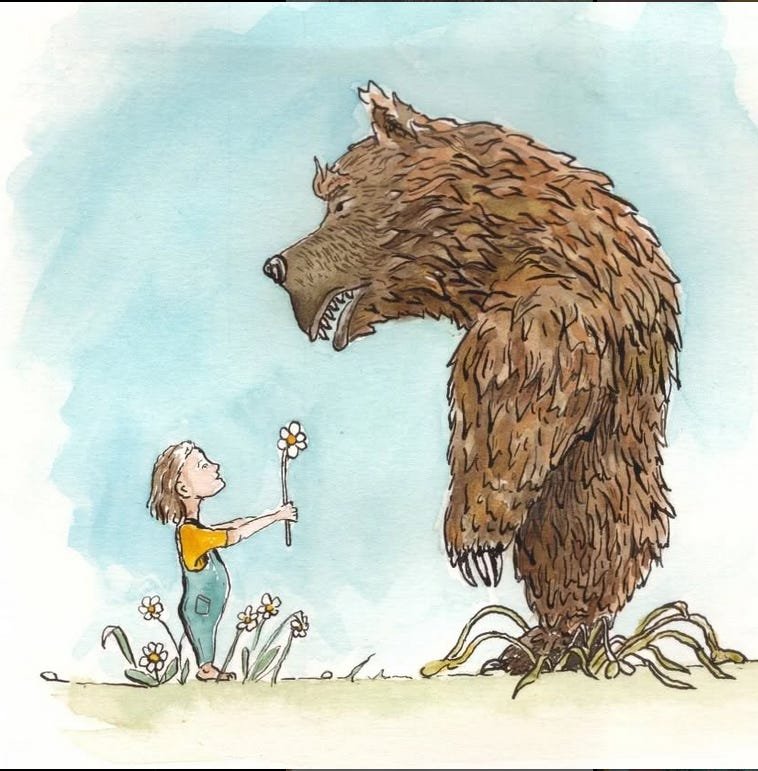
During the COVID-19 lockdowns of 2020, illustrator Tom Morgan and Amie were in a seventh-floor flat together in Valladolid, Spain, unable to go outside for anything except groceries and medicine. They decided to make something together, and passed creative work back and forth — one day he would draw in response to her writing, the next she would write in response to his drawings. It was their way of making sense of a strange and isolating time. Tom drew first. What follows is what they made.
Day 15
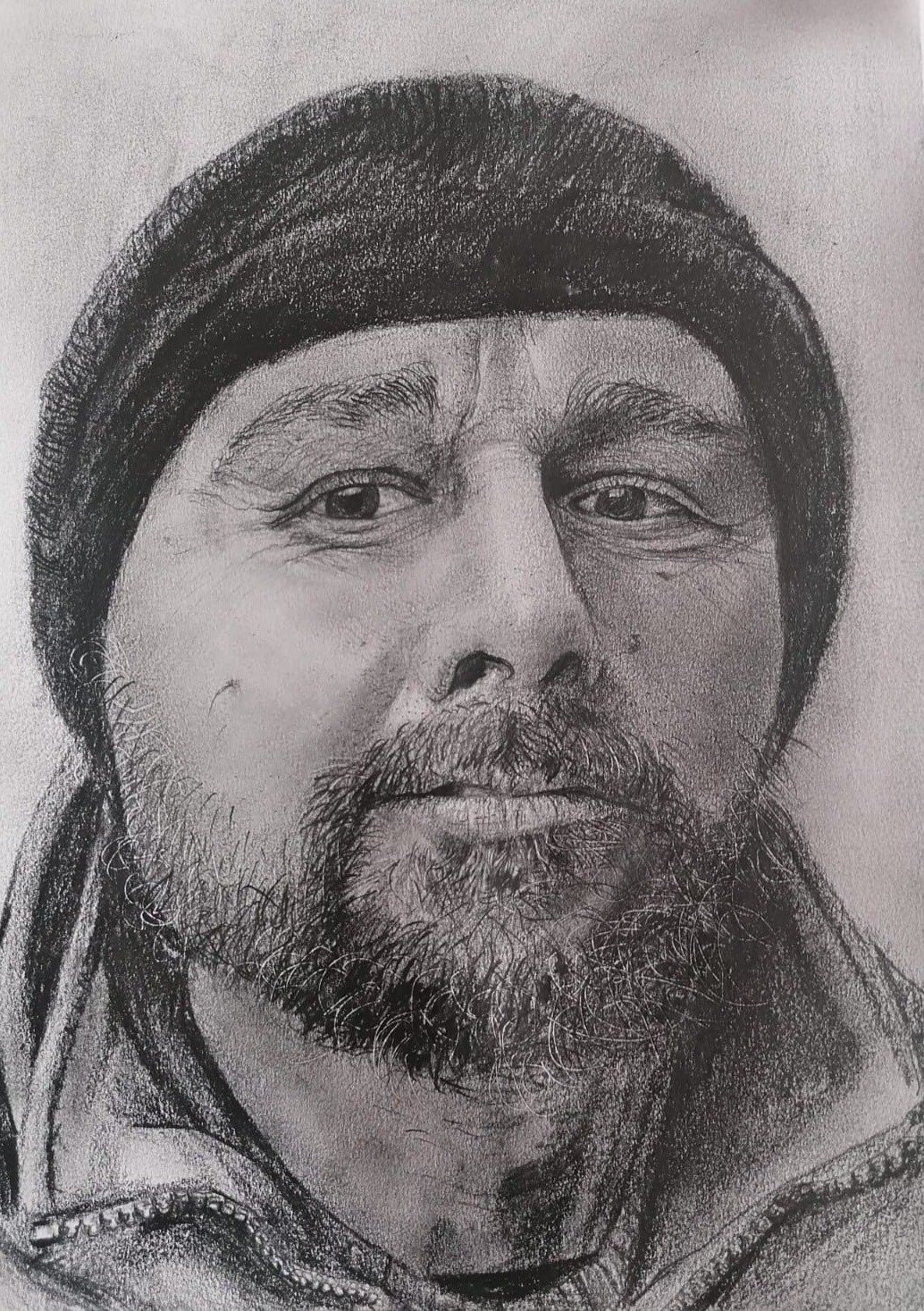
At 11:30 a.m. one Monday, after a phone conversation with her mother, she took her morning scenic stroll through the hallway and into the wilderness of his bedroom. Outside, the clouded world was waiting, yet it would need to wait a little longer.
“What was his name again?” she called out. He was in the kitchen, recreating a Columbian recipe he learnt on his travels. Food had never before provided them with such hope for pleasure as it did in those endless indoor days.
“Who are you talking about?”
“The homeless man you drew" she says.
The man’s name had drifted from them both, like the rolling rhythm of the river they used to converse with and walk beside. Yet his story remained in the longing of captured eyes and the mapping of lived lines. They questioned where he was and how he was getting by. If they ever saw him again, it was said, they’d like to speak with that man whose smile once decorated their street, to gift him the portrait, and remind him how he is, and always will be, a piece of nature's beautiful art.
Day 20
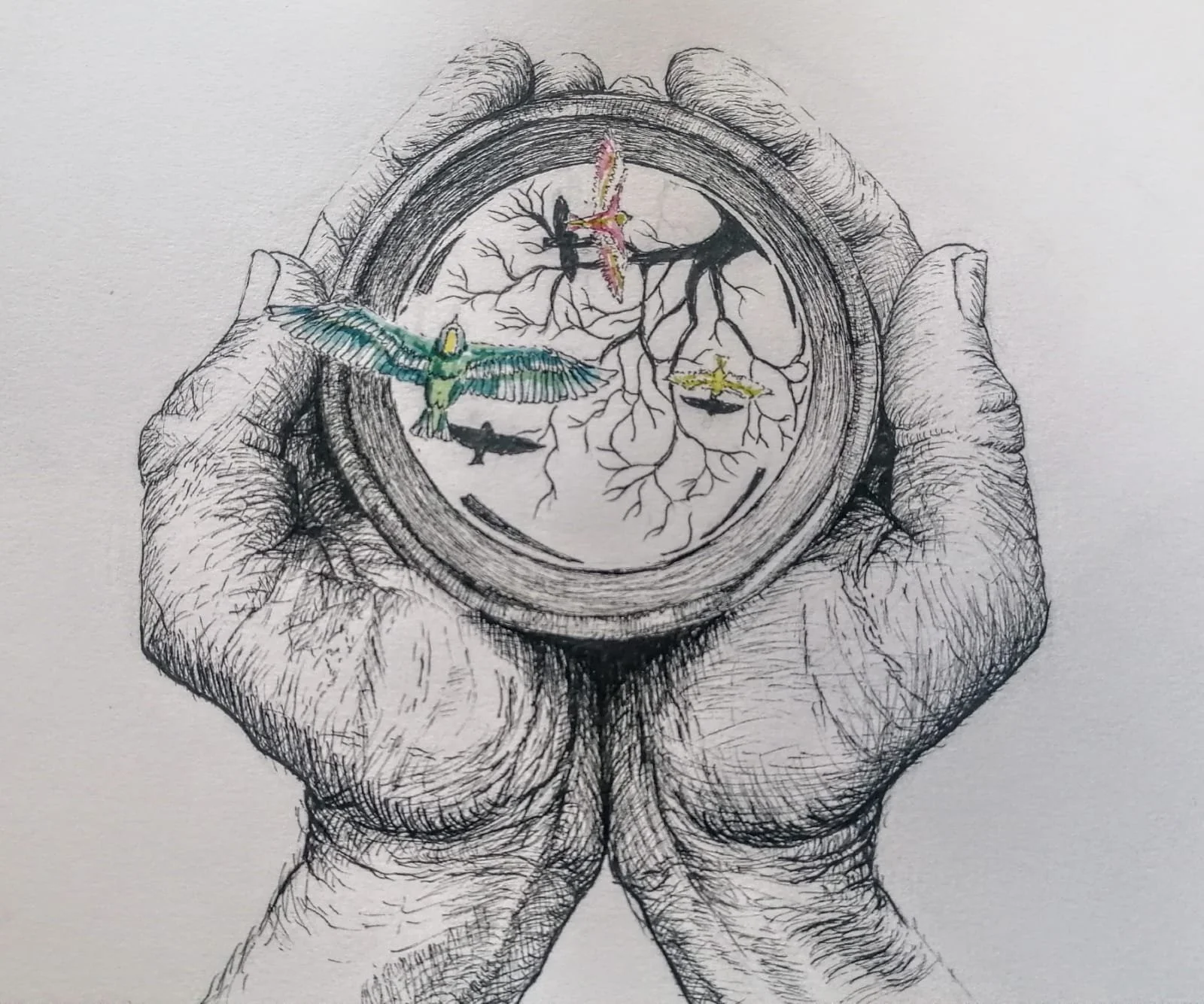
It is not so much the taste of tea that she loves
More the feeling of holding warmth between both hands,
Like a comforting liquid sun that is cool enough to kiss.
A British remedy prescribed to ease the ache
Felt every time the curtains are pulled open to greet the grey.
When she looks up to a sea of blue, infinities’ door opens.
She can fly all the way through.
Yet beneath a dull, caged sky she is captured,
Like a netted bird,
And it is on days such as these
That a cup of tea sets her free.
Day 25
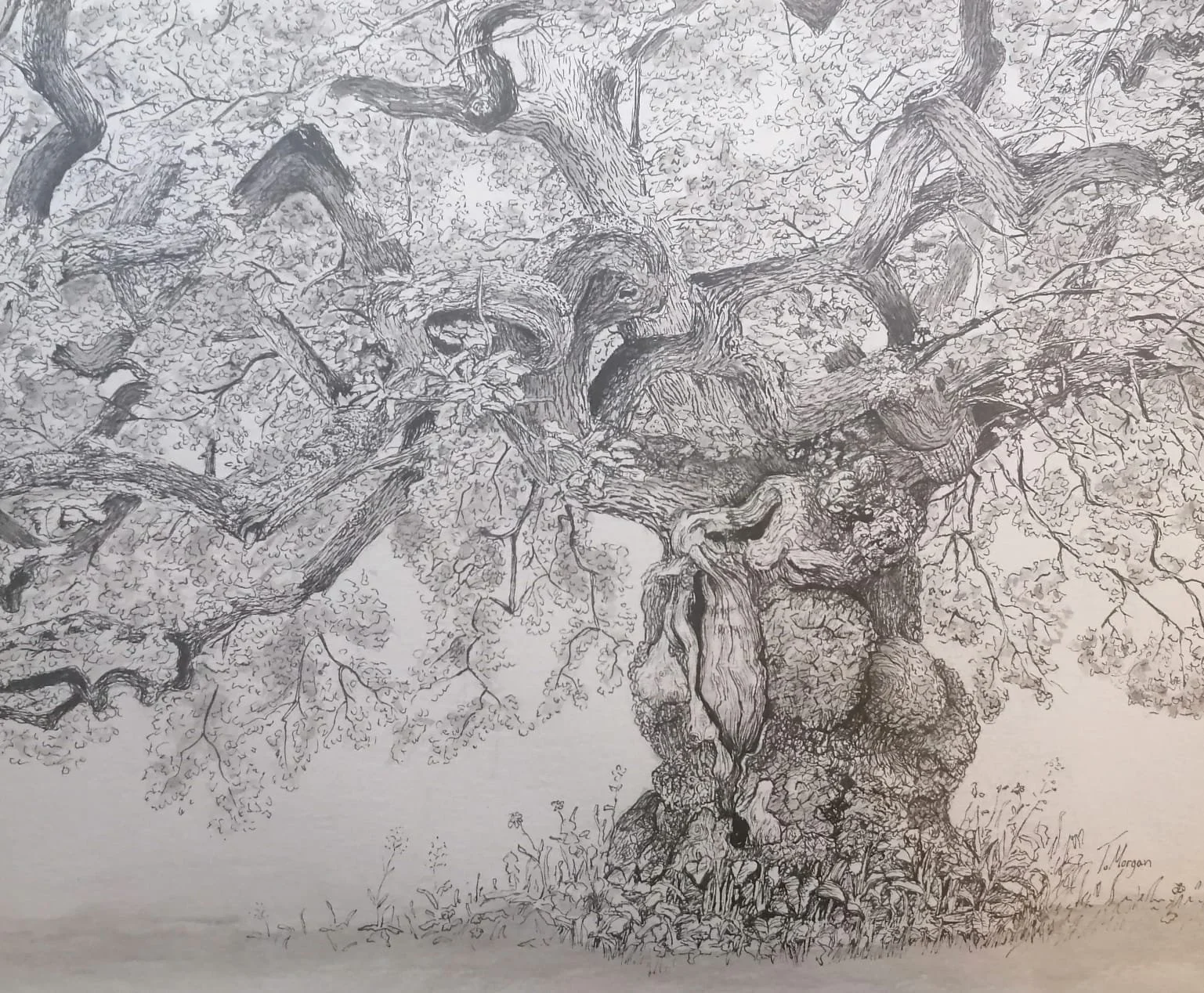
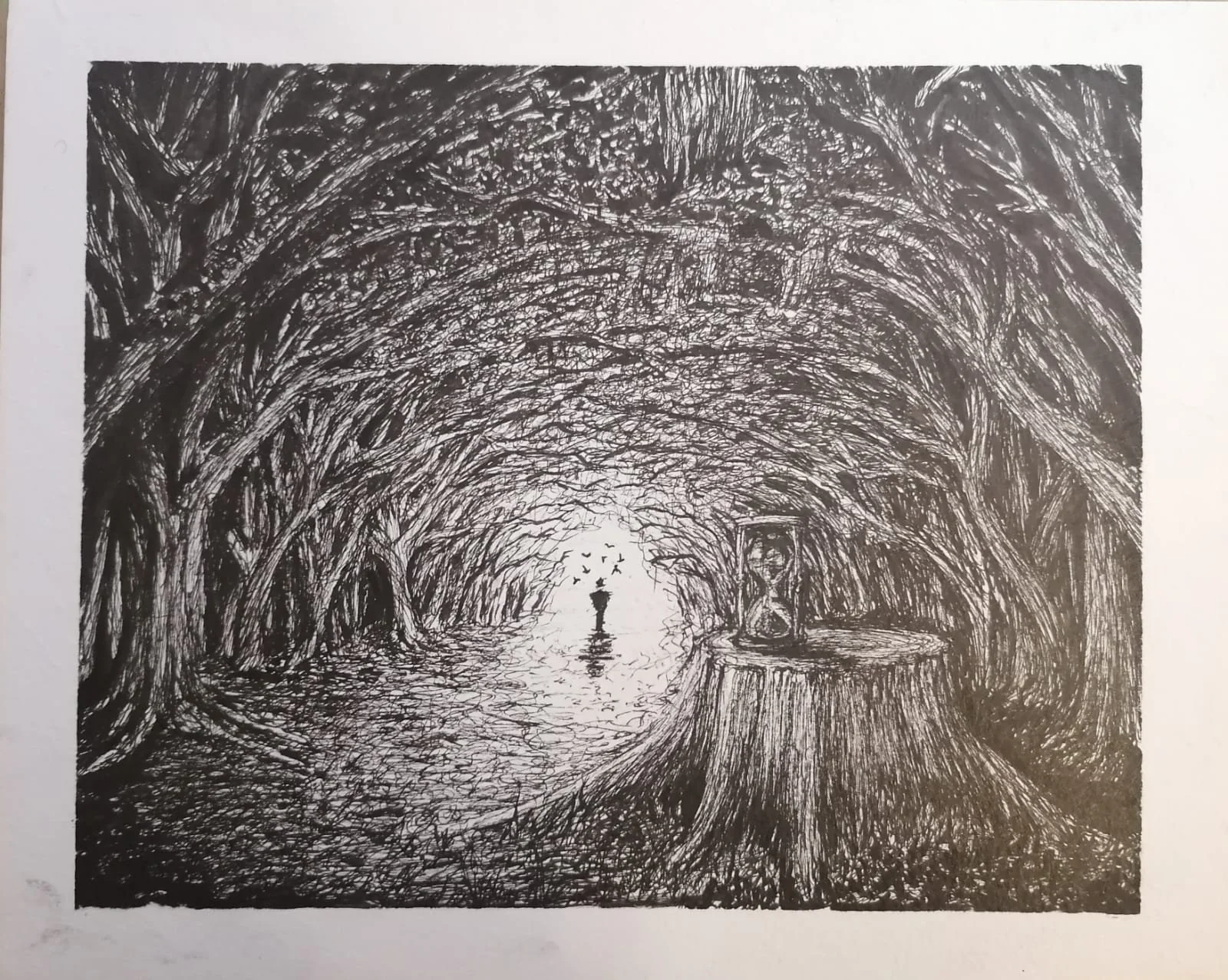
“This grief” he said, “this grief that floods out of me at opportune moments, is just love. It’s all the love I have for him, love that has grown my entire life like a giant oak. But that oak has nowhere to go. The forest is gone. So I must carry it around with me, on my shoulders, for the rest of my life. The tree will never grow lighter, but with time, my body will become stronger. Either that or I will be crushed beneath the weight of it.”
Day 35
She used to believe that time took everything away and that nothing could survive it. Now, though, it feels the opposite. She is sure that time brings all things forward. It carries them towards us, and we need only to ensure that we have our hands open, that we have let go of all that we were carrying, so that we can make the exchange. If our hands are full, we can’t receive what it offers. If our eyes are elsewhere, we may miss the interaction altogether. If time hands you a baton, you must run with it and pass what you have received on to another human being, who in turn is waiting with open hands for what it is you have to offer. She says that time in this way is the greatest relay on earth, human being after human being handing what they hold on to down to another in their path. If the baton is made with anything but truth, then eventually it will crumble away, and you will be passing nothing but dust
Day 37
“What are you drawing?” She asks knowingly, peering over at his sketchbook.
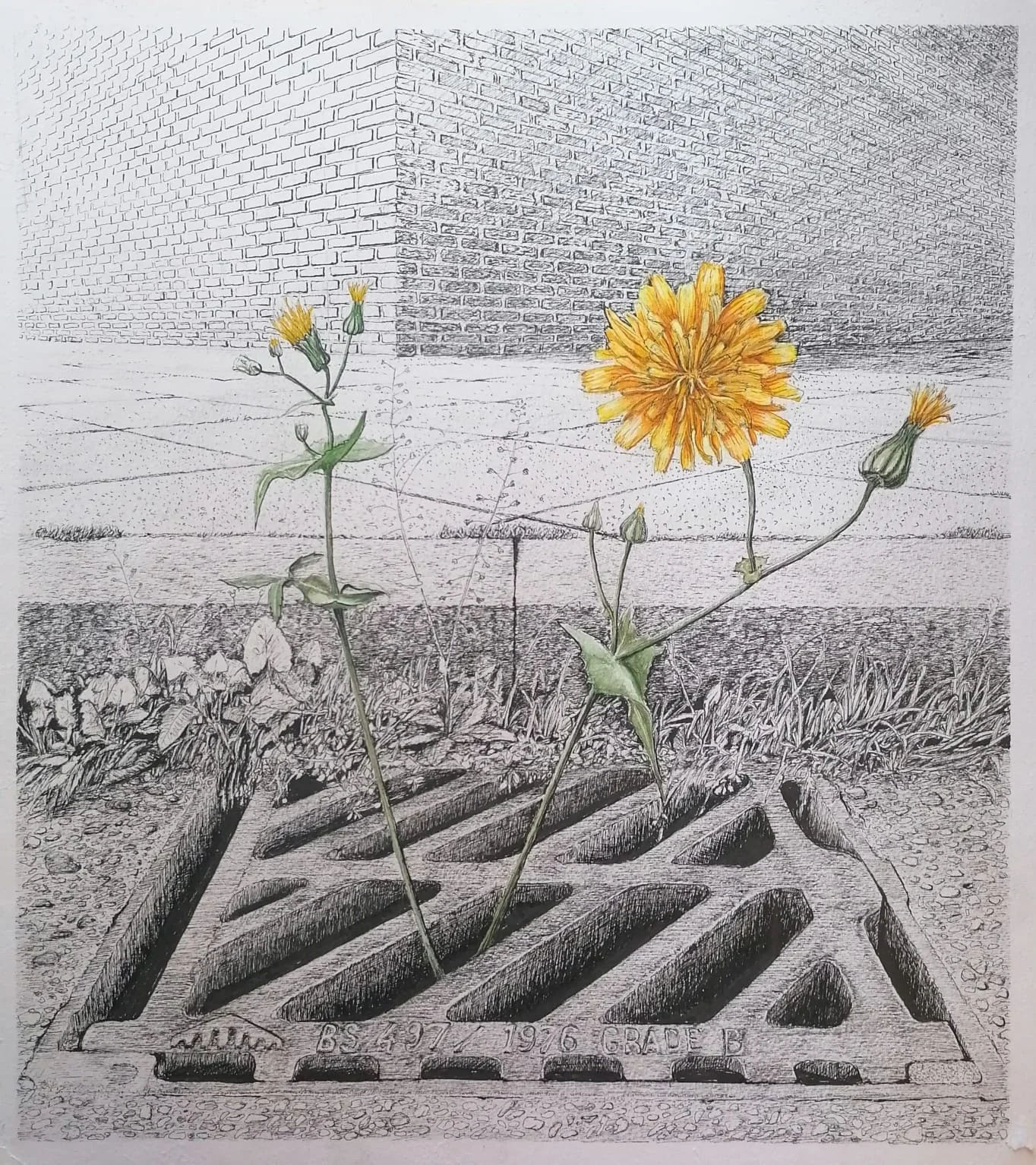
“What are you writing?” is his response, but he doesn’t look up. He can’t, for his eyes have entered another place, out of necessity. After thirty-seven days inside of concrete walls, they have found a way to be with nature again.
“About this” she says repositioning her journal on her lap. “I’m writing about this.” Her pencil suspends above her last written word and she bounces it between her fingertips. She is tired of being inside now and her legs are restless. Her lungs want to breathe fresh air, yet there is no garden for her to retreat to, no piece of earth to lie on. An open window isn’t the same, however far she hangs herself out of it.
His eyes project forward still, into his work.
“I want to write about you drawing, and me writing, and us having a conversation” she says.
“A conversation about what?”
“About why you love weeds so much.”
He laughs and the sound pulls him out from inside, or perhaps in from outside. He can’t be sure which.
“It’s like I’ve told you” he begins, readjusting his position on the armchair which has moulded to his body shape. “No matter where the seeds land, or however barren it seems there, they always find enough goodness to grow towards the light.”
Day 40
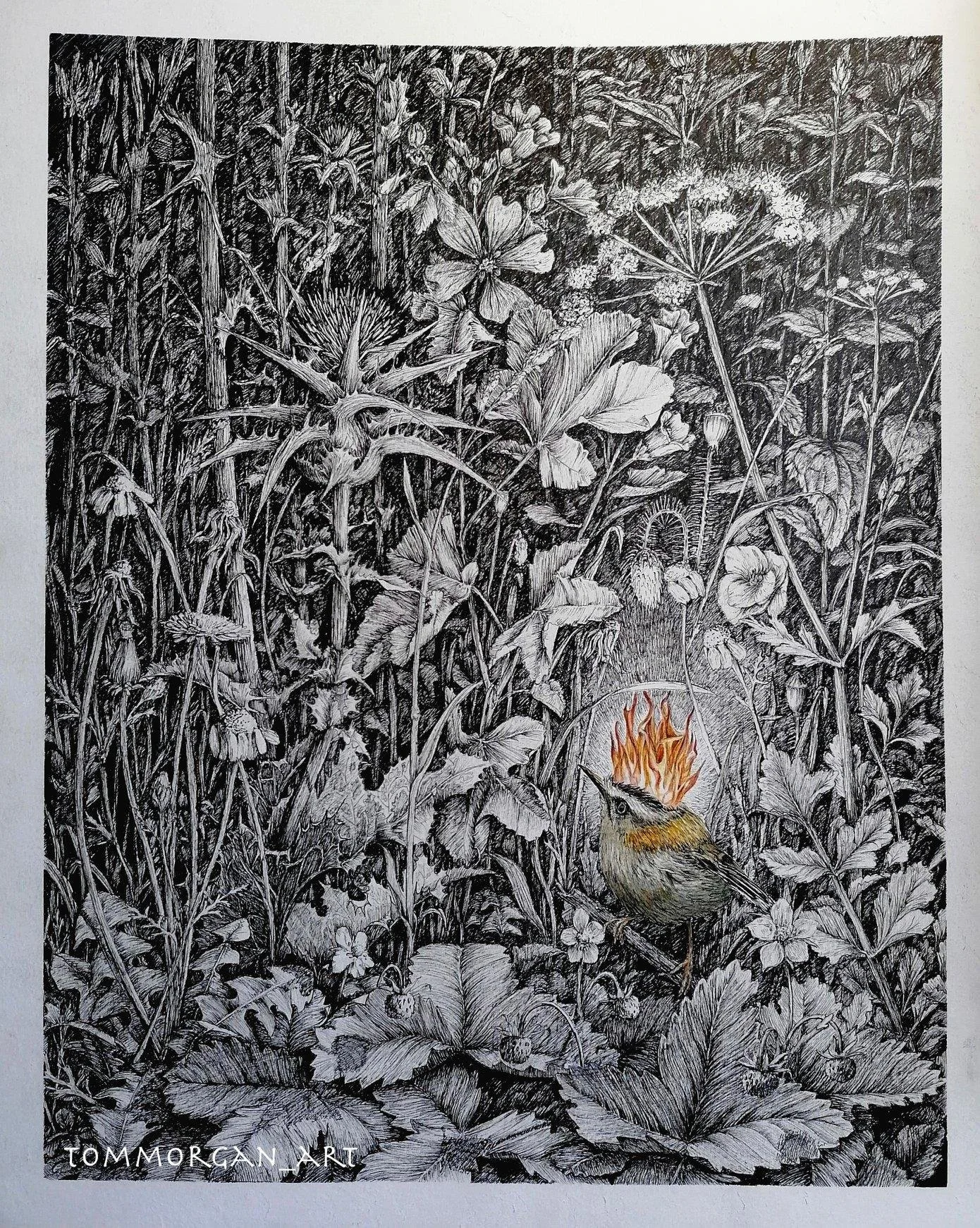
Not all that is ancient comes to pass;
not all aflame burns to dust.
Not every thorn catches skin,
nor does every nettle sting.
Frayed upon a lifetime worn,
rarely threads remain untorn.
Yet beauty brambles paths obscure
leading us to wisdom's door.
Day 43
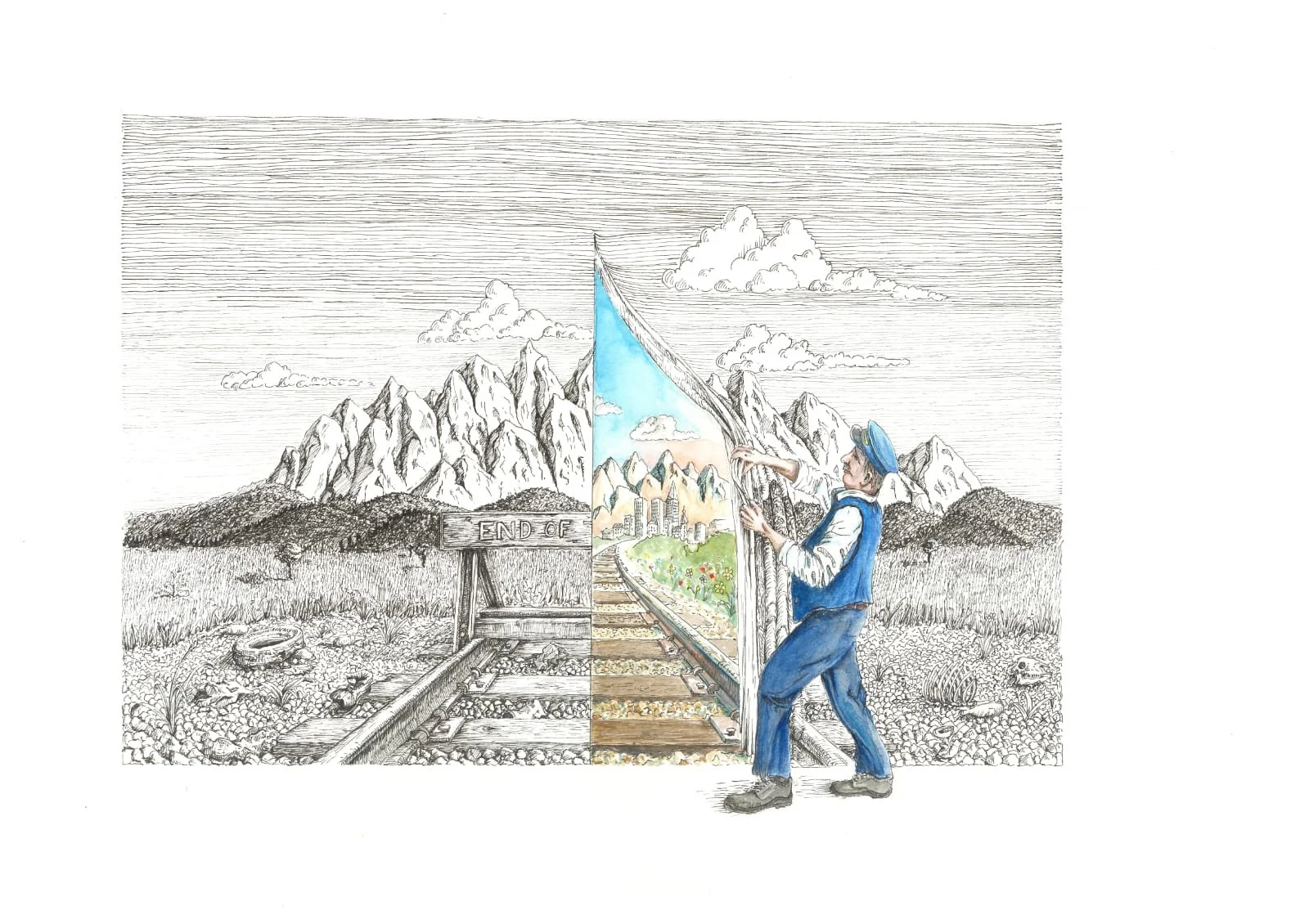
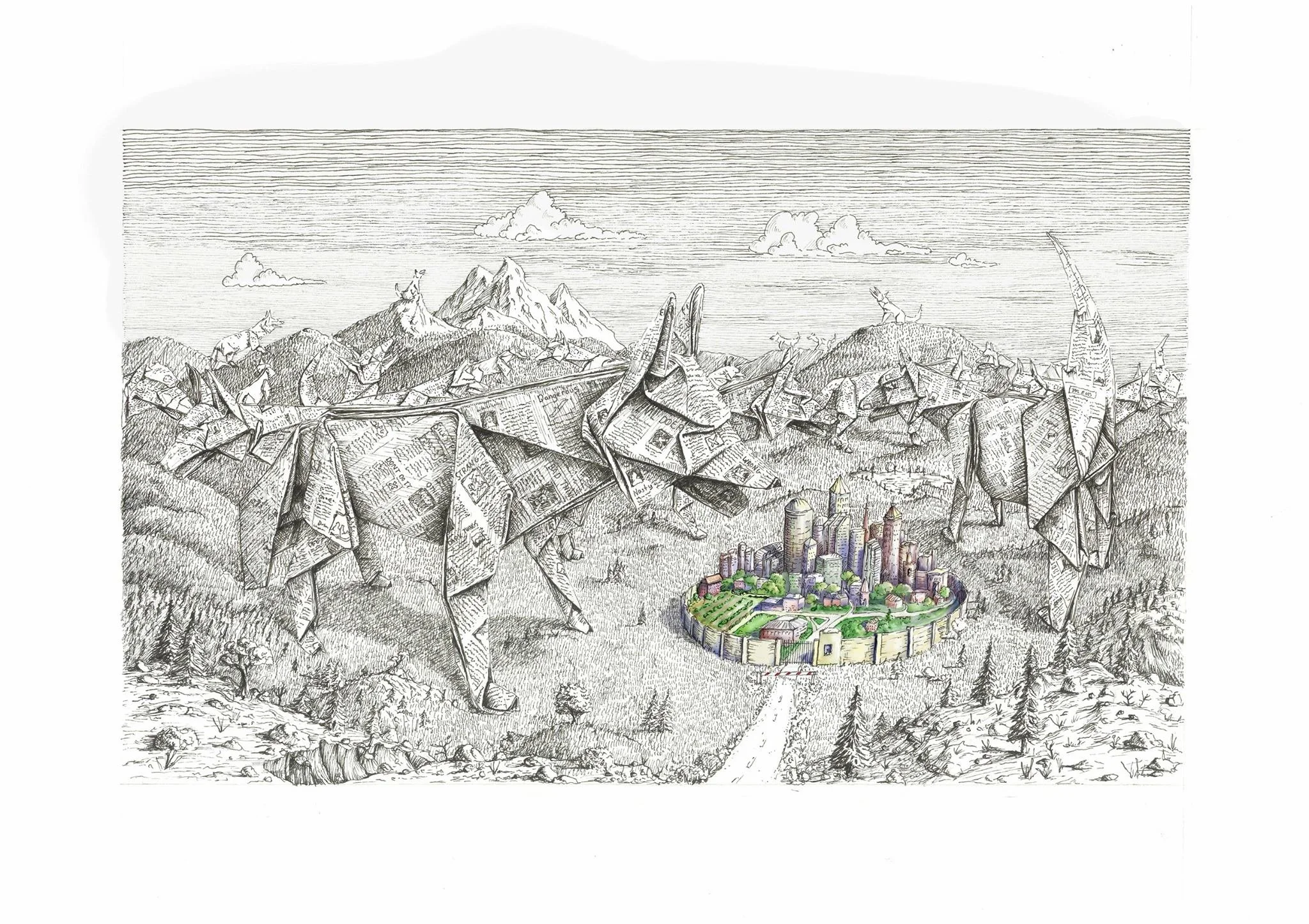
According to the train timetable, there are seven stops on this route and the one we just pulled into is the last. Yet I remain seated, despite the announcement over the tannoy asking all passengers to make their way to the exit. This is because I know, just like the driver, that there is still one more destination, one that cannot be found on any map. It will never be seen on road signs, bus routes, or even birth certificates. Officially, Abacus City doesn’t exist.
Day 47
You speak about the weather in Abacus. You speak about what you’ve had for dinner and how sweet the bananas are in the local supermarket. You speak about what you are going to see at the theatre on the weekend. But you never, not under any circumstance, talk about work. These are the rules, and I still don’t know if my great-grandfather was the first to break them or if he was the first to get caught. Either way, on July 13th 1968, just before my great-grandfather went missing for the second and the last time in his life, he gave a piece of advice to his daughter, who would give the same advice to my mother, who, in whispers, passed it down to me.
“Don’t believe what they say about wolves”, my mother said one night as we lay together in her bed. She still had her youthfulness then, and her hope, which shone through the blue of her eyes. “All our lives, from earliest childhood, we’ve been led to believe through the fairytales we’ve been told that wolves are the enemy: vicious, dangerous predators who only want to harm and destroy us all. But don’t, for the love of god, don’t you dare believe what they say about wolves